Gazi.AIInvestigación
ES

Investigación doctoral · Solicitud de patente 2022/002331

Una plataforma de IA sostenible para la inteligencia de fuentes abiertas.

Las organizaciones necesitan información de fuentes públicas para decidir, pero analizarla exige científicos de datos, servidores y presupuesto. La plataforma Gazi.AI ejecuta todo el ciclo de inteligencia de fuentes abiertas en los ordenadores de escritorio que la organización ya tiene, mientras la gente sigue trabajando con ellos.

El ciclo OSINT, dividido en cuatro contenedores

Cada paso del proceso de inteligencia de fuentes abiertas es un pequeño microservicio con una sola función. Cada uno se ejecuta en un contenedor Docker, en los ordenadores de la organización que estén libres, bajo una capa ligera de orquestación.

  1. AccesoLos contenedores recogen datos de fuentes abiertas y los pasan al almacenamiento.
  2. AlmacenamientoLos contenedores guardan los datos en una base de datos o un sistema de archivos.
  3. AnálisisLos contenedores analizan los datos con técnicas de IA y envían los resultados a los informes.
  4. InformeUn servidor de archivos o web entrega a la dirección los informes para sus decisiones.
El ciclo OSINT como cuatro microservicios que se ejecutan en contenedores Docker en los propios ordenadores de la organización 1 · Accesodatos abiertos 2 · Almacenamientobase o archivos 3 · Análisiscon IA 4 · Informepara decidir Equipos de usuario Contenedores Docker orquestados

Tres piezas clave

Arquitectura de microservicios

Los microservicios nacen de la arquitectura orientada a servicios, pero cada uno es una pequeña aplicación con un único propósito. Funcionan de forma independiente y hacen bien una sola tarea, por lo que son fáciles de mover, escalar y sustituir.

Contenedores Docker

Un contenedor empaqueta el código con todo lo que necesita, así que funciona igual en cualquier ordenador. Docker Engine funciona en Linux, macOS y Windows, y convierte ordenadores de oficina corrientes en una nube privada.

Infraestructura distribuida

La computación en la nube, en malla, paralela, voluntaria y oportunista resuelve cada una una parte distinta del análisis de datos. La plataforma las combina en los ordenadores de los usuarios para analizar información de fuentes abiertas sin nueva inversión.

De dónde viene el modelo

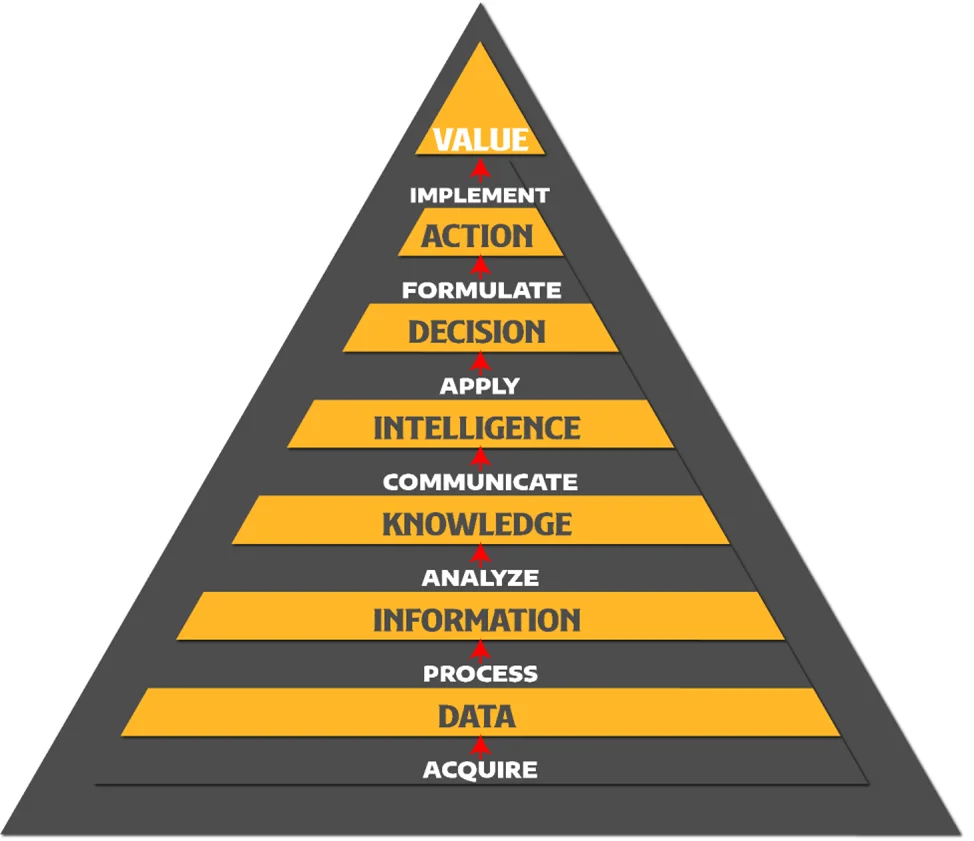
Cadena de valor del conocimiento

La gestión del conocimiento lo trata como un activo: se adquiere, se almacena, se comparte y se aplica a las decisiones. Las fuentes externas, como noticias, informes sectoriales, dictámenes jurídicos, investigaciones y estadísticas oficiales, son vitales, y la mayoría son abiertas. El problema ya no es el acceso, sino el análisis.

OSINT y dirección estratégica

La investigación combina los estándares de dos disciplinas, la inteligencia de fuentes abiertas y la dirección estratégica, en un único modelo que hace utilizable la información pública en todos los niveles de dirección.

Sistemas de información sostenibles y Sociedad 5.0

La Sociedad 5.0 y la Industria 5.0 piden a la tecnología que sirva a las personas, al planeta y a la prosperidad, y no solo a la obtención de valor. Reutilizar ordenadores que ya están encendidos es la respuesta de la plataforma a la sostenibilidad ambiental.

Figuras de la tesis

Diagramas de la investigación doctoral. Selecciona una figura para verla a tamaño completo.

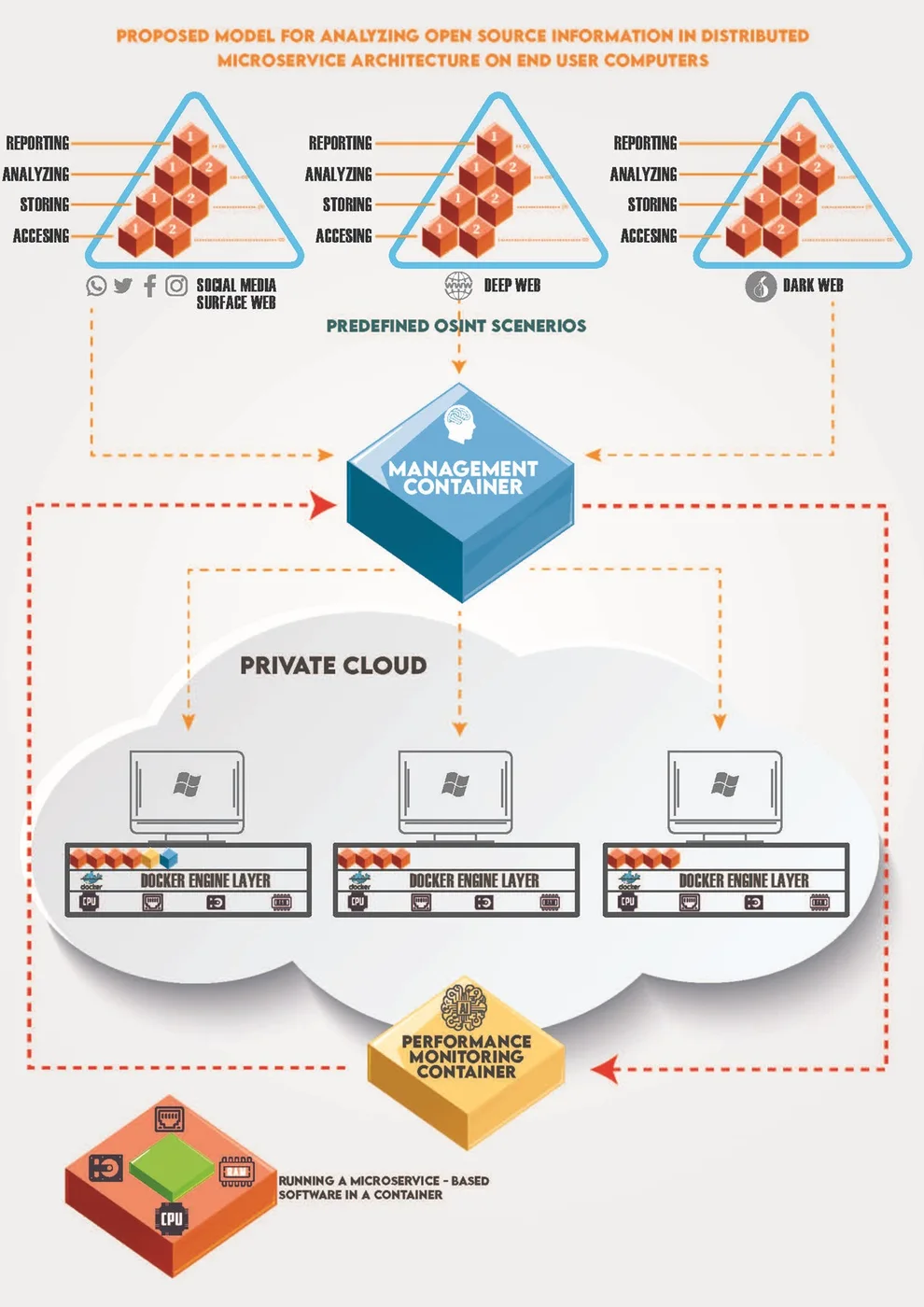
El modelo propuesto: inteligencia de fuentes abiertas en los equipos de los usuarios, con microservicios distribuidos
Figura 1 El modelo propuesto: inteligencia de fuentes abiertas en los equipos de los usuarios, con microservicios distribuidos
Cadena de valor del conocimiento: de los datos al valor
Figura 2 Cadena de valor del conocimiento: de los datos al valor
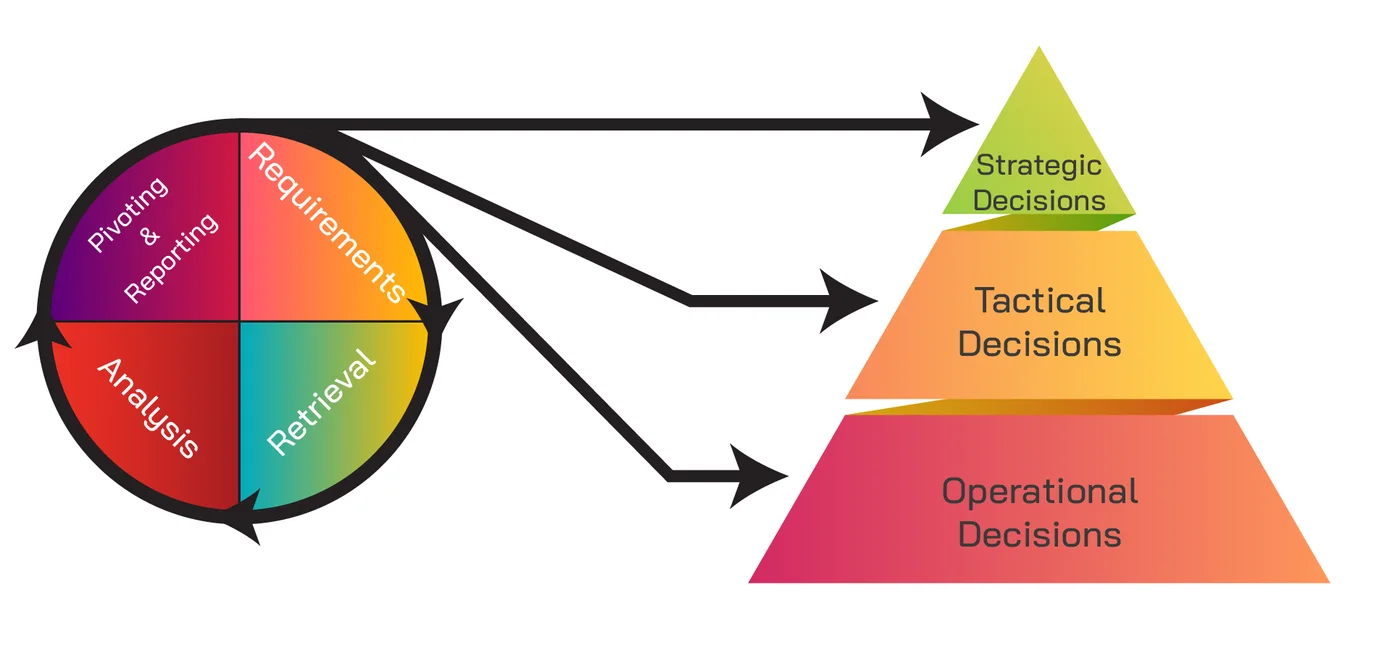
El ciclo OSINT al servicio de las decisiones estratégicas, tácticas y operativas
Figura 3 El ciclo OSINT al servicio de las decisiones estratégicas, tácticas y operativas
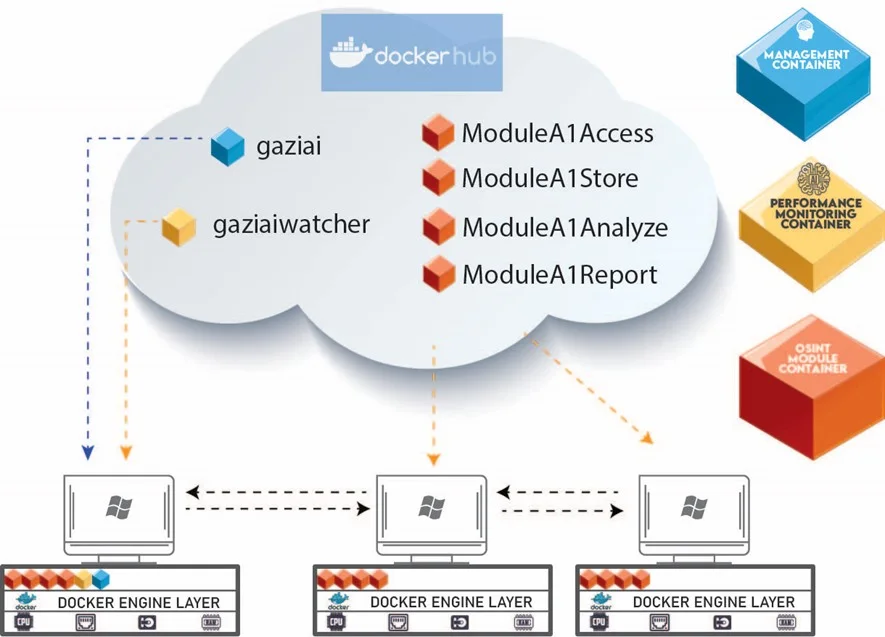
Los módulos de Gazi.AI como contenedores Docker, distribuidos desde Docker Hub a los ordenadores de oficina
Figura 4 Los módulos de Gazi.AI como contenedores Docker, distribuidos desde Docker Hub a los ordenadores de oficina
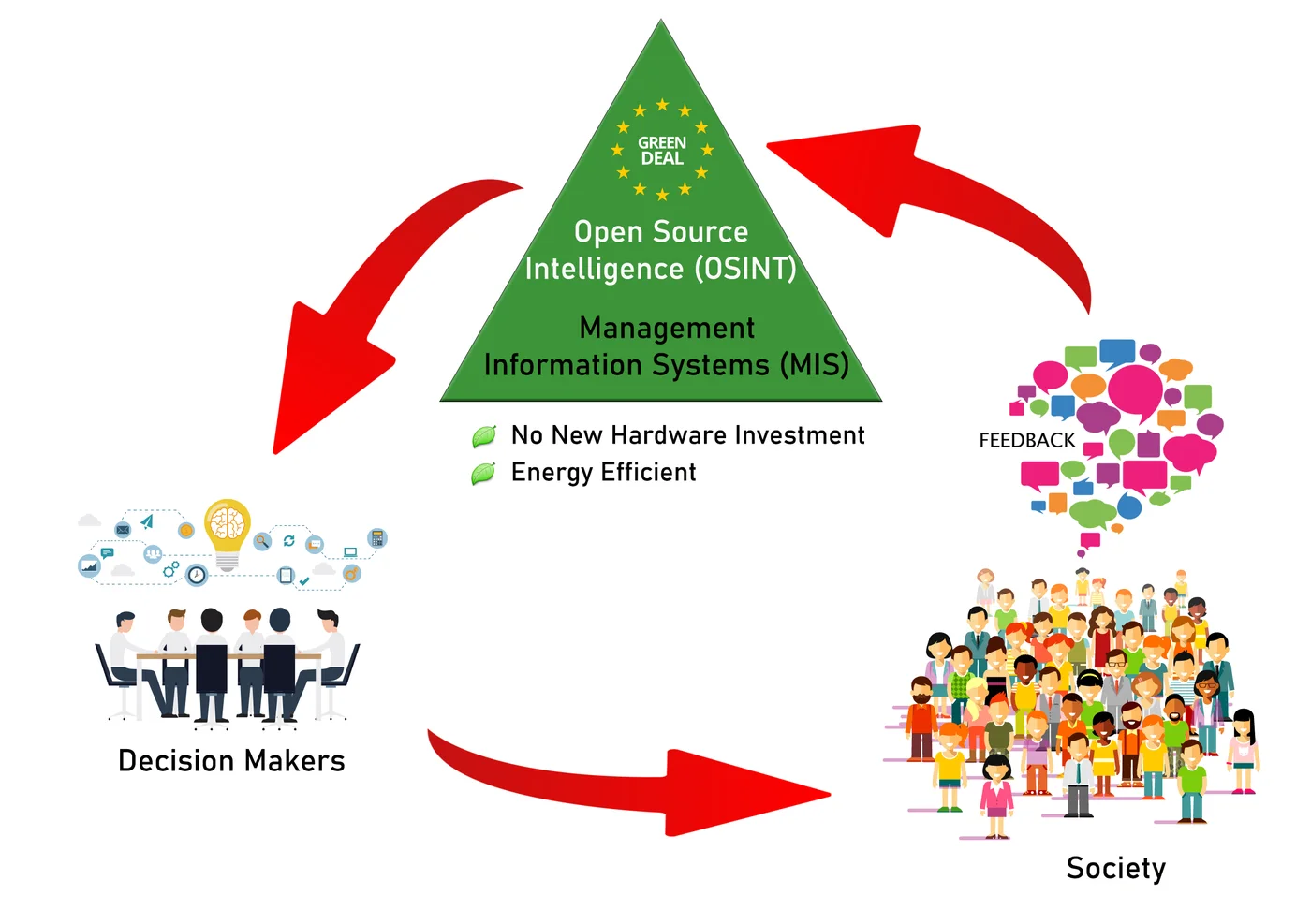
Sistemas de información sostenibles y Sociedad 5.0: responsables de decisiones, sociedad y retroalimentación
Figura 5 Sistemas de información sostenibles y Sociedad 5.0: responsables de decisiones, sociedad y retroalimentación

Publicaciones

La tesis, los artículos, el capítulo de libro y la patente en los que se basa la plataforma. Los títulos y resúmenes están en inglés.

Tesis doctoralEn turco
A Platform Development for Analyzing Open-Source Information in Distributed Microservice Architecture on End User Computers

Hüseyin Akarslan · Director: Prof. Dr. Şeref Sağıroğlu

Resumen

When we look at the academic studies and corporate applications carried out in the field of management information systems, it is seen that they focus on internal data, but external data are left in the background. Since the mid-2010s, the widespread use of internet access, especially on smart portable devices, and the explosion of social media along with other mobile applications have caused a paradigm shift in this field. It has become a necessity rather than an option that external data obtained from open sources, especially the data produced by end users, should be carefully handled by organizations and used in strategic, tactical and operational decision-making processes. In this study, a model was developed by considering the “open-source intelligence” discipline and management information systems, which have been developed since the 1950s, regarding the collection and analysis of external data. The theoretical model for which we have applied for a patent, in which institutions can manage open-source intelligence processes by using their existing desktop computer resources in a distributed microservice architecture without making new investments and benefit from the generated reports in decision-making processes, has also been developed as a software project called “Gazi.AI”. Thanks to the developed platform, an endless number of open-source intelligence projects can be integrated and carried out in a distributed structure, and a solution has been produced in which calculation processes requiring high resources can be run on end user computers with low resources in a distributed structure, with the same approach. This platform, developed on containerization technology with the green deal approach, has been tested practically by different individuals and institutions, and their feedback has been systematically collected and analyzed and discussed in terms of the hypotheses we put forward at the beginning of our research. The modules developed on three different open-source intelligence scenarios, which collect data from the Twitter environment, which is the most popular social media application and now uses the “X” brand, were tested practically by the participants, and as a result, the five hypotheses we put forward in our study were proven.

Artículo de revista2024

Developing a Green AI Platform for SMEs to Analyze Open-source Information with the Approach of Society 5.0

Hüseyin Akarslan, Şeref Sağıroğlu · SN Computer Science

Resumen

Management and information systems are considered two major disciplines that have to be combined to benefit from knowledge for rational decision-making which means strict procedures utilizing objective knowledge and logic for many years. Effective and efficient use of already invested organizational resources is a key subject to gain a competitive advantage by making decisions with the help of AI techniques which benefit from both internal and external knowledge. This paper introduces a new model to get benefits from open-source intelligence (OSINT) in the context of external knowledge with a green computing approach for solving global organizational challenges in the scope of Society 5.0. This research has a dual background, theoretical and practical. Problem defining and hypothesis formulation was carried out by literature review. Then, the application developed according to the proposed model was put into action in some organizations for testing, and feedback from experts who participated in the proof of concept (POC) activities was evaluated and discussed empirically. Finally, the findings of our research, the advantages of our model, and both academic and business future work were summarized. It has been practically determined that the model and application we have developed are largely successful in line with our hypotheses. However, the weaknesses and advantages of our study were also revealed. Our research is the first study that combines Management Information Systems and Open-Source Intelligence disciplines with the approach of Society 5.0 to support SMEs in analyzing open-source information to build better decision-making mechanisms. The developed application in this study can also be applied to solving other green distributed computing needs in different domains.

Solicitud de patente2022

Open source information analysis system and method

Hüseyin Akarslan, Şeref Sağıroğlu · Oficina Turca de Patentes y Marcas · Solicitud n.º 2022/002331

Artículo de revista2021

A Model Proposal for Analyzing Open Source Information in End User Computers

Hüseyin Akarslan · International Journal of Intelligence and CounterIntelligence

Resumen

Cloud, grid, parallel, volunteer, and opportunistic computing are different forms of distributed computing and each of these concepts addresses different problems in data analysis. One of the latest virtualization technologies, containerization, provides new capabilities with a thin layer on end-user desktop computers in the field of distributed computing. From the viewpoint of management information systems, the information is the key element in decision-making processes, and in the age of the Internet the information that is necessary for organizations is accessible from publicly available open sources. Every organization needs to operate an open-source intelligence process to use the open-source data in different levels of management. However, the problem is that each organization needs data scientists and hardware and software resources to fulfill this requirement. Big enterprise companies or governments can make an investment to solve this problem, but small and medium-sized enterprises or small institutions may not have enough budget. A distributed microservice-based data analysis model with the technology of Docker containerization on the end-user computers is proposed.

Capítulo de libroEn turco

Open Source Intelligence (OSINT)

Hüseyin Akarslan · Editores: Prof. Dr. Şeref Sağıroğlu, Prof. Titular Dr. Sedat Akleylek

Resumen

In short, open source intelligence (OSINT), which can be defined as the process of collecting and analyzing data that can be obtained from public sources, is discussed in this study from different aspects with an interdisciplinary perspective. Open source intelligence, which is a very broad subject in terms of its scope, is increasingly gaining importance. The basic principles, methodology and how it can be integrated with current technological developments, which is a method successfully implemented in many different fields, are explained with examples from practice. Since the subheadings discussed in this study, which draws a general framework, are subjects that can be examined in more depth, they are discussed in the light of abstract information in order not to expand the scope. Popular trends in open source intelligence are mentioned in each section and future developments are emphasized in the last section.

ManuscritoEn preparación

A Practical Example of Using Open-source Intelligence (OSINT) Techniques in Management Information Systems (MIS)

Hüseyin Akarslan, Şeref Sağıroğlu

Equipo de investigación

Buscamos nuevos investigadores. Si quieres unirte, usa el formulario de abajo.

Prof. Dr. Şeref SağıroğluDirector de investigación
Hüseyin Akarslan, Dr.Investigador principal
VoluntariosInvestigadores que quieren trabajar en inteligencia de fuentes abiertas e IA

Escribe al equipo de investigación

Preguntas sobre la plataforma, una prueba de concepto para tu organización o unirte al equipo: escríbenos.

Imagen del código de verificación: cinco letras y números
Escribe los cinco caracteres de la imagen. Da igual mayúsculas o minúsculas.