Gazi.AIRecherche
FR

Recherche doctorale · Demande de brevet 2022/002331

Une plateforme d’IA sobre pour le renseignement en sources ouvertes.

Pour décider, les organisations ont besoin d’informations issues de sources publiques, mais les analyser exige des data scientists, des serveurs et un budget. La plateforme Gazi.AI exécute tout le cycle du renseignement en sources ouvertes sur les ordinateurs de bureau dont l’organisation dispose déjà, pendant que les équipes continuent à les utiliser.

Le cycle OSINT, réparti en quatre conteneurs

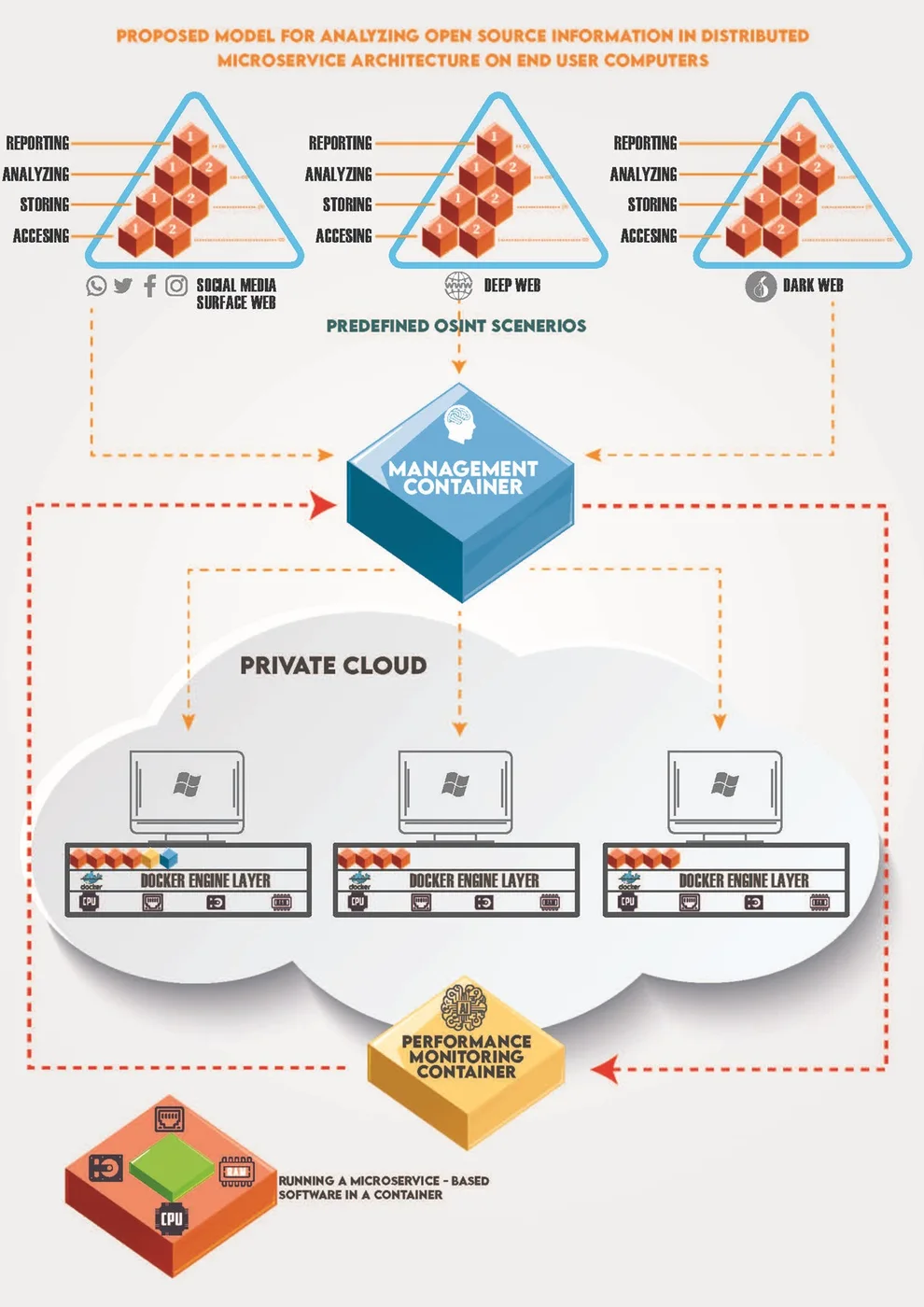
Chaque étape du renseignement en sources ouvertes est un petit microservice à fonction unique. Chacun tourne dans un conteneur Docker, sur les ordinateurs disponibles de l’organisation, sous une couche d’orchestration légère.

  1. AccèsDes conteneurs collectent les données en sources ouvertes et les transmettent au stockage.
  2. StockageDes conteneurs conservent les données dans une base de données ou un système de fichiers.
  3. AnalyseDes conteneurs analysent les données par des techniques d’IA et transmettent les résultats au reporting.
  4. RapportUn serveur de fichiers ou web fournit à la direction les rapports utiles à ses décisions.
Le cycle OSINT sous forme de quatre microservices exécutés dans des conteneurs Docker sur les ordinateurs de l’organisation 1 · Accèsdonnées ouvertes 2 · Stockagebase ou fichiers 3 · Analyseavec l’IA 4 · Rapportpour décider Postes de travail Conteneurs Docker orchestrés

Trois briques

Architecture en microservices

Les microservices sont issus de l’architecture orientée services, mais chacun est une petite application à fonction unique. Indépendants, ils font une seule chose et la font bien, ce qui les rend faciles à déplacer, à faire monter en charge et à remplacer.

Conteneurisation Docker

Un conteneur embarque le code avec tout ce dont il dépend : il fonctionne donc de la même façon sur n’importe quel ordinateur. Docker Engine tourne sous Linux, macOS et Windows, ce qui transforme des ordinateurs de bureau ordinaires en cloud privé.

Infrastructure distribuée

Le cloud, la grille, le calcul parallèle, volontaire et opportuniste répondent chacun à une partie de l’analyse de données. La plateforme les combine sur les postes des utilisateurs pour analyser l’information en sources ouvertes sans nouvel investissement.

Les fondements du modèle

Chaîne de valeur de la connaissance

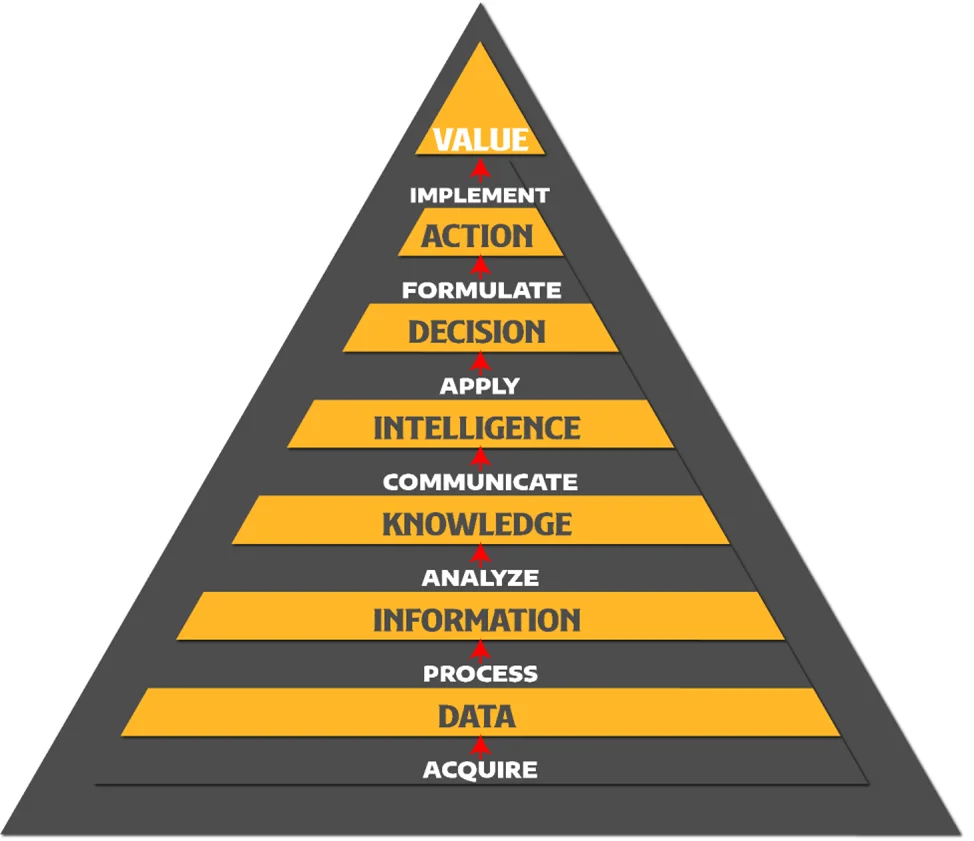
La gestion des connaissances traite le savoir comme un actif : acquis, stocké, partagé et mobilisé pour décider. Les sources externes, comme l’actualité, les rapports sectoriels, les avis juridiques, la recherche et les statistiques publiques, sont essentielles, et la plupart sont ouvertes. Le problème n’est plus l’accès, mais l’analyse.

OSINT et management stratégique

La recherche réunit les référentiels de deux disciplines, le renseignement en sources ouvertes et le management stratégique, en un modèle qui rend l’information publique exploitable à tous les niveaux de direction.

SI de gestion durables et Société 5.0

La Société 5.0 et l’Industrie 5.0 demandent à la technologie de servir les personnes, la planète et la prospérité, et pas seulement la création de valeur. Réutiliser des ordinateurs déjà allumés est la réponse de la plateforme à l’enjeu environnemental.

Figures de la thèse

Schémas issus de la recherche doctorale. Sélectionnez une figure pour l’ouvrir en taille réelle.

Le modèle proposé : du renseignement en sources ouvertes sur les postes des utilisateurs, en microservices distribués
Figure 1 Le modèle proposé : du renseignement en sources ouvertes sur les postes des utilisateurs, en microservices distribués
Chaîne de valeur de la connaissance : de la donnée à la valeur
Figure 2 Chaîne de valeur de la connaissance : de la donnée à la valeur
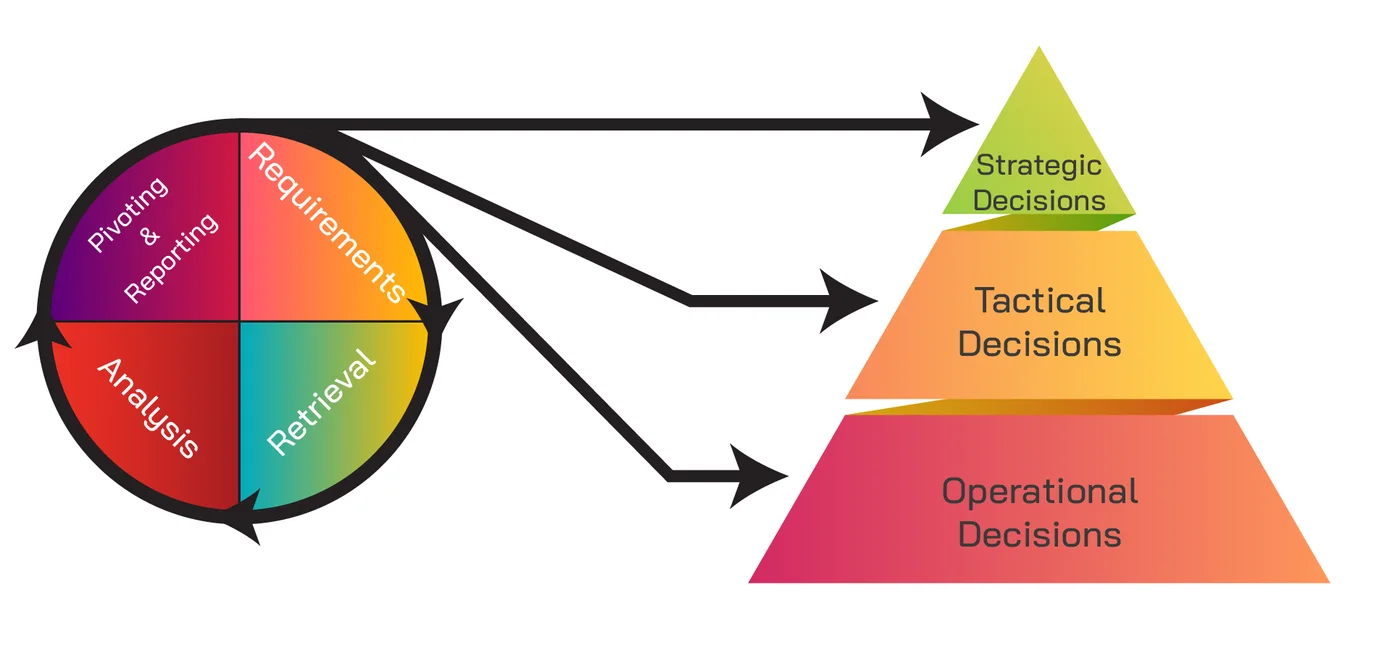
Le cycle OSINT au service des décisions stratégiques, tactiques et opérationnelles
Figure 3 Le cycle OSINT au service des décisions stratégiques, tactiques et opérationnelles
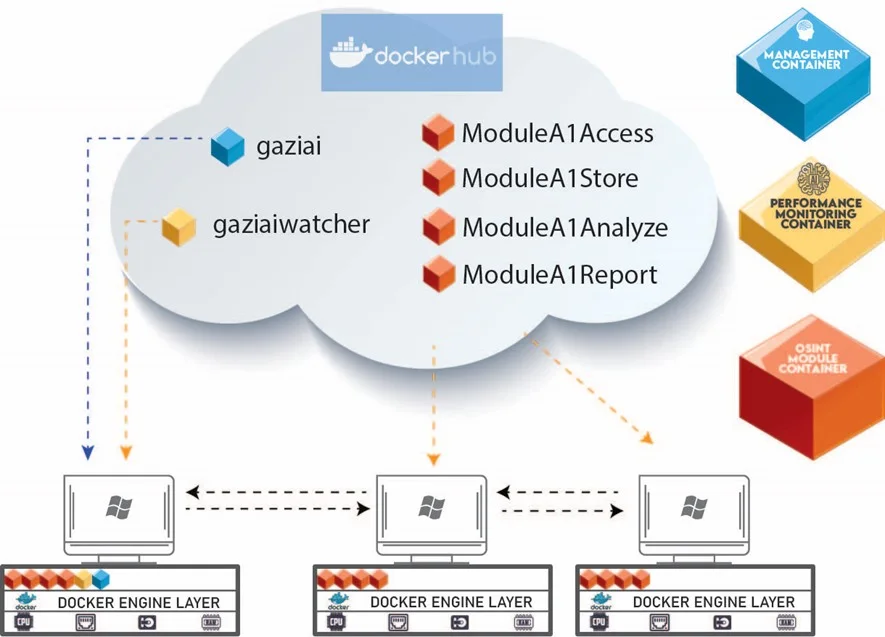
Les modules Gazi.AI sous forme de conteneurs Docker, distribués depuis Docker Hub vers les ordinateurs de bureau
Figure 4 Les modules Gazi.AI sous forme de conteneurs Docker, distribués depuis Docker Hub vers les ordinateurs de bureau
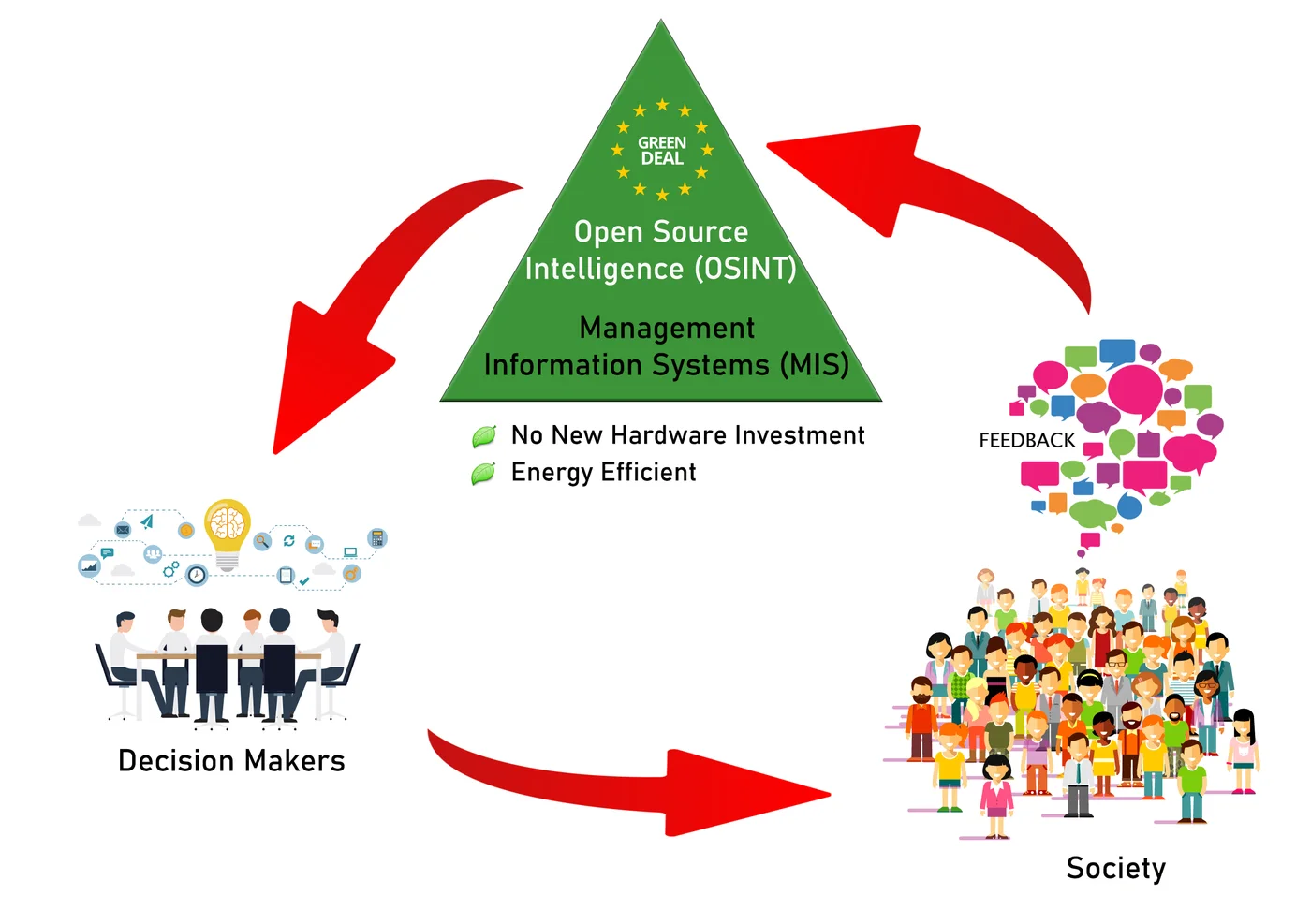
SI de gestion durables et Société 5.0 : décideurs, société et retours
Figure 5 SI de gestion durables et Société 5.0 : décideurs, société et retours

Publications

La thèse, les articles, le chapitre d’ouvrage et le brevet à l’origine de la plateforme. Les titres et résumés sont en anglais.

Thèse de doctoratEn turc
A Platform Development for Analyzing Open-Source Information in Distributed Microservice Architecture on End User Computers

Hüseyin Akarslan · Directeur de thèse : Pr Şeref Sağıroğlu

Résumé

When we look at the academic studies and corporate applications carried out in the field of management information systems, it is seen that they focus on internal data, but external data are left in the background. Since the mid-2010s, the widespread use of internet access, especially on smart portable devices, and the explosion of social media along with other mobile applications have caused a paradigm shift in this field. It has become a necessity rather than an option that external data obtained from open sources, especially the data produced by end users, should be carefully handled by organizations and used in strategic, tactical and operational decision-making processes. In this study, a model was developed by considering the “open-source intelligence” discipline and management information systems, which have been developed since the 1950s, regarding the collection and analysis of external data. The theoretical model for which we have applied for a patent, in which institutions can manage open-source intelligence processes by using their existing desktop computer resources in a distributed microservice architecture without making new investments and benefit from the generated reports in decision-making processes, has also been developed as a software project called “Gazi.AI”. Thanks to the developed platform, an endless number of open-source intelligence projects can be integrated and carried out in a distributed structure, and a solution has been produced in which calculation processes requiring high resources can be run on end user computers with low resources in a distributed structure, with the same approach. This platform, developed on containerization technology with the green deal approach, has been tested practically by different individuals and institutions, and their feedback has been systematically collected and analyzed and discussed in terms of the hypotheses we put forward at the beginning of our research. The modules developed on three different open-source intelligence scenarios, which collect data from the Twitter environment, which is the most popular social media application and now uses the “X” brand, were tested practically by the participants, and as a result, the five hypotheses we put forward in our study were proven.

Article de revue2024

Developing a Green AI Platform for SMEs to Analyze Open-source Information with the Approach of Society 5.0

Hüseyin Akarslan, Şeref Sağıroğlu · SN Computer Science

Résumé

Management and information systems are considered two major disciplines that have to be combined to benefit from knowledge for rational decision-making which means strict procedures utilizing objective knowledge and logic for many years. Effective and efficient use of already invested organizational resources is a key subject to gain a competitive advantage by making decisions with the help of AI techniques which benefit from both internal and external knowledge. This paper introduces a new model to get benefits from open-source intelligence (OSINT) in the context of external knowledge with a green computing approach for solving global organizational challenges in the scope of Society 5.0. This research has a dual background, theoretical and practical. Problem defining and hypothesis formulation was carried out by literature review. Then, the application developed according to the proposed model was put into action in some organizations for testing, and feedback from experts who participated in the proof of concept (POC) activities was evaluated and discussed empirically. Finally, the findings of our research, the advantages of our model, and both academic and business future work were summarized. It has been practically determined that the model and application we have developed are largely successful in line with our hypotheses. However, the weaknesses and advantages of our study were also revealed. Our research is the first study that combines Management Information Systems and Open-Source Intelligence disciplines with the approach of Society 5.0 to support SMEs in analyzing open-source information to build better decision-making mechanisms. The developed application in this study can also be applied to solving other green distributed computing needs in different domains.

Demande de brevet2022

Open source information analysis system and method

Hüseyin Akarslan, Şeref Sağıroğlu · Office turc des brevets et des marques · Demande n° 2022/002331

Article de revue2021

A Model Proposal for Analyzing Open Source Information in End User Computers

Hüseyin Akarslan · International Journal of Intelligence and CounterIntelligence

Résumé

Cloud, grid, parallel, volunteer, and opportunistic computing are different forms of distributed computing and each of these concepts addresses different problems in data analysis. One of the latest virtualization technologies, containerization, provides new capabilities with a thin layer on end-user desktop computers in the field of distributed computing. From the viewpoint of management information systems, the information is the key element in decision-making processes, and in the age of the Internet the information that is necessary for organizations is accessible from publicly available open sources. Every organization needs to operate an open-source intelligence process to use the open-source data in different levels of management. However, the problem is that each organization needs data scientists and hardware and software resources to fulfill this requirement. Big enterprise companies or governments can make an investment to solve this problem, but small and medium-sized enterprises or small institutions may not have enough budget. A distributed microservice-based data analysis model with the technology of Docker containerization on the end-user computers is proposed.

Chapitre d’ouvrageEn turc

Open Source Intelligence (OSINT)

Hüseyin Akarslan · Éditeurs : Pr Şeref Sağıroğlu, Maître de conférences Sedat Akleylek

Résumé

In short, open source intelligence (OSINT), which can be defined as the process of collecting and analyzing data that can be obtained from public sources, is discussed in this study from different aspects with an interdisciplinary perspective. Open source intelligence, which is a very broad subject in terms of its scope, is increasingly gaining importance. The basic principles, methodology and how it can be integrated with current technological developments, which is a method successfully implemented in many different fields, are explained with examples from practice. Since the subheadings discussed in this study, which draws a general framework, are subjects that can be examined in more depth, they are discussed in the light of abstract information in order not to expand the scope. Popular trends in open source intelligence are mentioned in each section and future developments are emphasized in the last section.

ManuscritEn préparation

A Practical Example of Using Open-source Intelligence (OSINT) Techniques in Management Information Systems (MIS)

Hüseyin Akarslan, Şeref Sağıroğlu

Équipe de recherche

Nous recherchons de nouveaux chercheurs. Pour nous rejoindre, utilisez le formulaire ci-dessous.

Pr Şeref SağıroğluResponsable de la recherche
Hüseyin Akarslan, docteurChercheur principal
BénévolesChercheurs souhaitant travailler sur le renseignement en sources ouvertes et l’IA

Contacter l’équipe de recherche

Questions sur la plateforme, preuve de concept pour votre organisation ou candidature : écrivez-nous.

Image du code de vérification : cinq lettres et chiffres
Saisissez les cinq caractères de l’image. Majuscules ou minuscules, peu importe.